
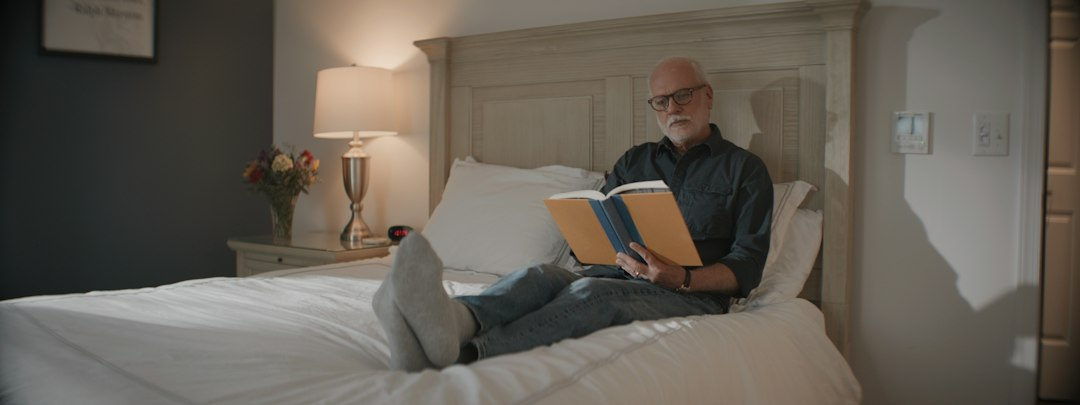
Making a bedroom safe for someone who is unsteady on their feet starts with three simple changes: adjusting the bed height so feet rest flat on the floor, clearing an illuminated pathway to the bathroom, and cushioning the fall zone. Most nighttime wobbles happen when someone transitions between lying down, sitting, and standing. Before we begin, please remember this is practical caregiving advice from my daily rounds, not medical advice—always consult your loved one’s doctor or physical therapist for personalized mobility guidance.
The Bed Height Equation Matters More Than You Think
A bed that is too tall turns waking up into a dangerous hop, while a bed that is too low traps weak knees.
When your loved one sits on the edge of the mattress, their feet should sit completely flat on the floor with their knees bent at a clean 90-degree angle. If their heels dangle, gravity pulls them forward before their leg muscles wake up.
You can adjust height easily by swapping out thick box springs for low-profile bunkie boards, or removing screw-in bed risers entirely.
Clear the Path to the Bathroom First
When nature calls at two in the morning, an unsteady senior will rarely stop to search for a light switch.
Place motion-activated amber nightlights along the baseboards leading from the bedside directly to the bathroom door. Warm amber or soft red light guides the way without waking the brain or causing temporary glare blindness.
Pick up every single throw rug along this path today.
On a caregiving floor, however, those pretty rug edges are simply catch-points for shuffling slippers.

Bedroom Safety Upgrades at a Glance
Here is how the most common bedroom modifications compare in cost, effort, and safety impact.

Do Your Loved One’s Slippers Help or Hurt Stability?
Floppy backless slippers are responsible for far more slips than slick floors alone.
Look for indoor shoes with a closed heel counter, a wide toe box, and a firm rubber sole that grips without sticking too hard to the carpet. Slip-on scuffs force toes to curl and grip with every step, which ruins natural balance.
Keep the supportive footwear positioned directly where their feet land when swinging out of bed, never tucked away inside a closet.

Hidden Tripping Traps Hiding in Plain Sight
Look closely at how bedding drapes over the edge of the mattress.
Oversized comforters and flowing bed skirts often puddle onto the floor, waiting to catch a heel when someone stands up half-awake. Tuck blankets securely or switch to lightweight coverlets tailored to stop just below the mattress seam.
Watch out for the bedside table as well.
Unsteady seniors instinctively lean their full weight on nightstands when rising. If the table is lightweight or on casters, it can slide out from under their hand, so anchor it or swap it for a heavier, flat-bottomed piece.
FAQ
Q. Are bed rails safe for seniors who wake up confused?
A. Full-length restraint rails can pose entrapment hazards for people with cognitive impairment. Look instead for compact transfer handles that slide deep between the mattress and box spring with a safety tether, offering a steady handhold without trapping the body.
Q. What kind of flooring is safest for an unsteady walker?
A. Low-pile, glue-down commercial carpet or slip-resistant vinyl with an impact-absorbing underlayment works best. Avoid thick, plush carpeting that drags on shuffling feet, as well as slick polished hardwood.
Q. How bright should nighttime bedroom lighting be?
A. Soft and low to the ground. Bright overhead lights can cause confusion and disorientation when someone wakes up suddenly, whereas low-lumen baseboard lighting illuminates hazards without glaring in their eyes.
Summary
- Set the mattress height so both feet rest completely flat on the floor with knees at a comfortable right angle.
- Light the nighttime pathway to the bathroom automatically and remove all decorative throw rugs.
- Protect the immediate bedside drop zone with a supportive assist rail, anchored furniture, and impact cushioning.
Helpful links — Sister Unice’s picks
The best places to go deeper, hand-picked:
- National Institute on Aging: Preventing Falls at Home — NIH’s official room-by-room guide provides evidence-based modifications for bedroom lighting, walkway clearance, and safe bed access.
- CDC STEADI: Older Adult Fall Prevention — CDC’s official clinical and caregiver initiative delivers standardized home safety screening tools to systematically eliminate fall risks.
- Eldercare Locator: Local Home Modification & Safety Programs — This federal Administration for Community Living service connects families with local Area Agencies on Aging for home assessments and modification grants.
Links go to third-party booking/shopping sites. I only list places and products with genuinely strong reviews.
NIH’s official room-by-room guide provides evidence-based modifications for bedroom lighting, walkway clearance, and safe bed access.
Not a paid placement or affiliate link — just a resource Unice trusts.
Sources
CDC STEADI – Older Adult Fall Prevention
Leave a Reply